Overview
About this Special Issue
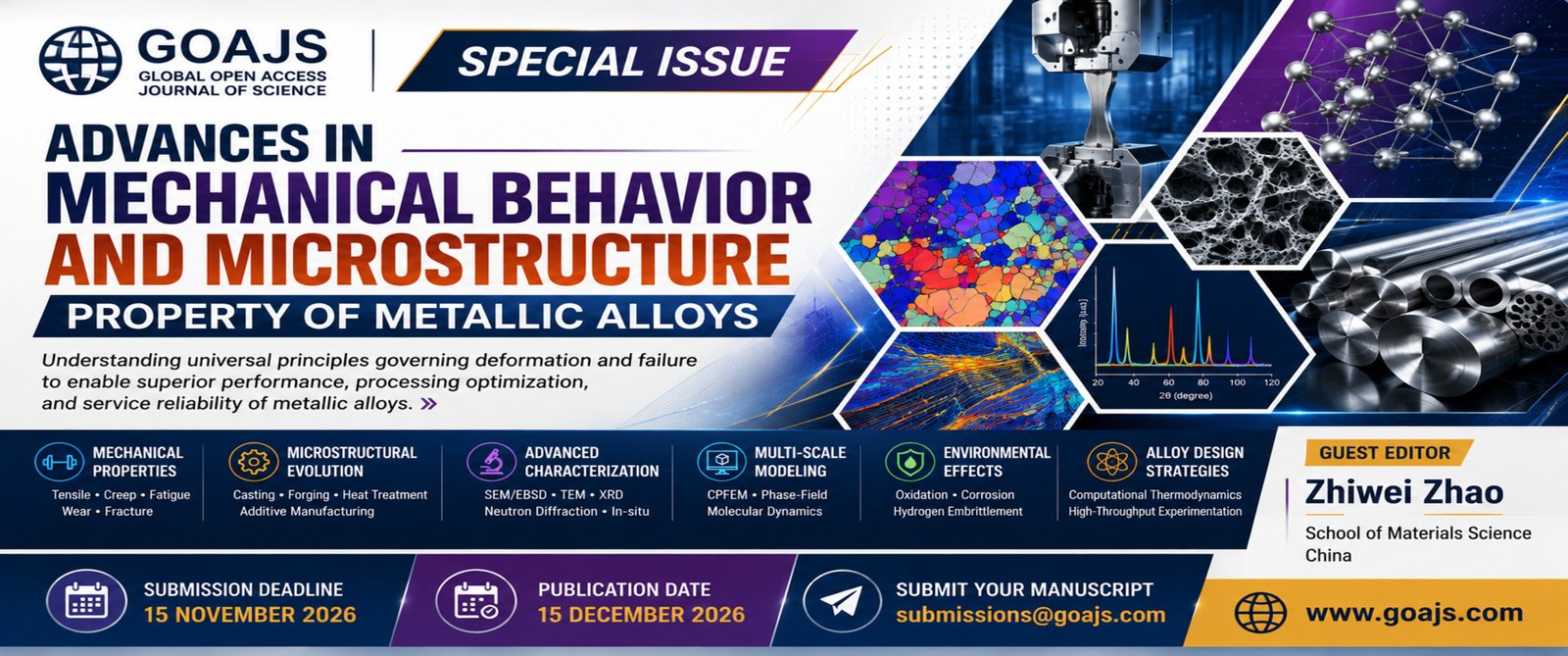
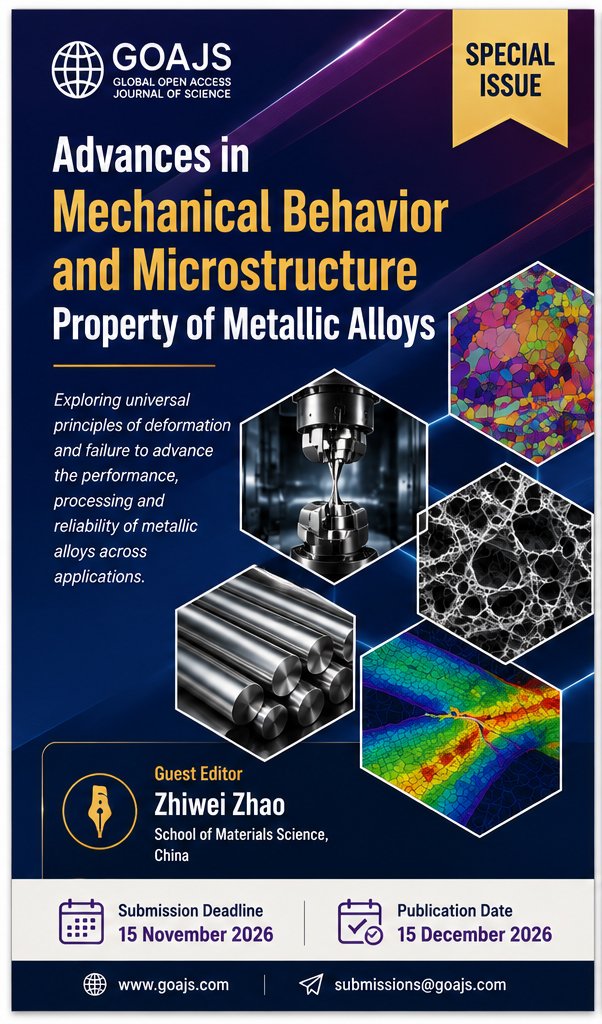
Scope and Description: This Special Issue aims to present the latest advances in understanding the mechanical performance and underlying deformation/failure mechanisms of metallic alloys – a class of materials that underpins numerous structural and functional applications. While specific alloy systems may differ in composition and processing, the fundamental principles governing strength, ductility, fatigue, creep, and fracture are often universal. This issue seeks to bring together contributions that explore these principles through experimental, theoretical, and computational approaches.
We invite original research and review articles covering, but not limited to, the following topics: (1) mechanical properties (tensile, creep, fatigue, wear) across a range of temperatures and strain rates; (2) microstructural evolution during processing (casting, forging, heat treatment, additive manufacturing, etc.) and its effect on performance; (3) advanced characterization techniques (SEM/EBSD, TEM, XRD, neutron diffraction, in situ testing) for identifying deformation substructures, phase transformations, and damage initiation; (4) multi scale modeling (CPFEM, phase field, molecular dynamics) to predict mechanical responses and failure; (5) environmental effects such as oxidation, corrosion, and hydrogen embrittlement; and (6) alloy design strategies via computational thermodynamics or high throughput experimentation.
The overarching goal is to foster a mechanistic understanding that transcends individual alloy systems, providing insights that can guide processing optimization and improve service reliability. We particularly encourage studies that combine advanced characterization with quantitative analysis, as well as works on novel alloy compositions or additive manufactured materials.